Discover piano online
Three one-hour live group piano lessons for children aged 6 to 15.
- 3 online group piano lessons
- Date of birth can be provided at purchase or activation
- Lesson times depend on available places
test



At Piano Académie, music theory is not taught as an abstract or discouraging subject. It is approached as a natural support for musical practice, helping children read, understand and play with greater ease.
Our teaching provides solid foundations without making learning burdensome. Children progress methodically while retaining their enjoyment of music.
Music theory gradually enables students to become independent when reading a score. It provides the essential tools for reading notes, understanding rhythm, recognising musical structures and sight-reading with greater confidence.
We have chosen a clearer, more practical and more musical approach. Music theory should never distance children from their instrument. On the contrary, it should help them play, listen and understand more effectively.
Concepts are introduced progressively within a structured framework and always connected to practical music-making.
For rhythm, Piano Académie uses the Takadimi method, which associates simple syllables with rhythmic patterns.
This approach makes rhythm more tangible, natural and easier to remember. It helps children feel and reproduce rhythmic structures more accurately.
Integrated into our teaching, it enables rigorous progress while keeping learning engaging and accessible.
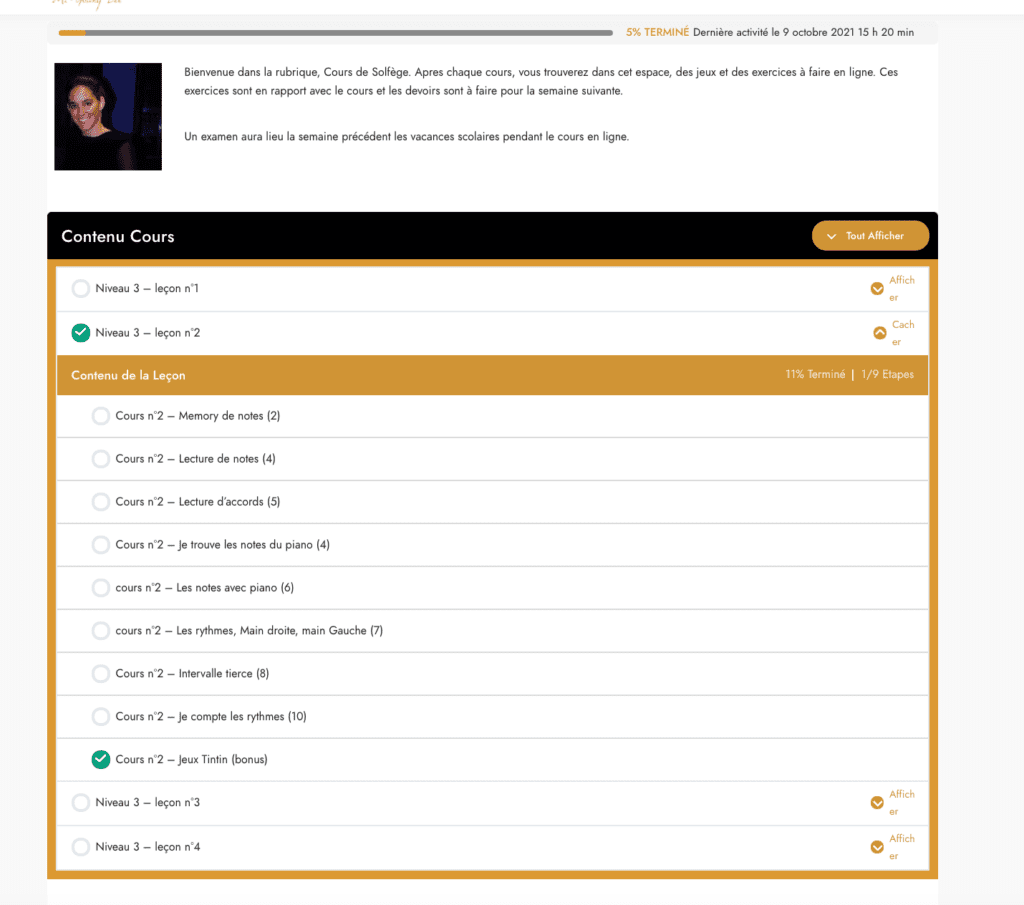
Children progress step by step through note reading, rhythm and sight-reading, before developing a deeper understanding of musical notation. The aim is not to accumulate theoretical knowledge, but to provide genuinely useful tools for their musical journey.
Lessons and exercises are available online through each student’s personal account. This allows them to review material between sessions, practise more regularly and consolidate their knowledge over time.
The curriculum is organised into several stages, ensuring that every student progresses consistently, clearly and gradually.
First steps in note reading and rhythm, in a format accessible to younger children.
Consolidating note reading, introducing intervals and developing more structured rhythmic skills.
Expanding note reading, developing rhythm and progressing towards greater fluency.
More independent sight-reading, an introduction to harmony and a deeper understanding of musical language.
Overall consolidation and increased independence in reading and understanding music.
Online music theory may be included in certain instrumental programmes. Specific options are also available for students who wish to study music theory only.
Online group lesson, with preferential terms for students already enrolled at the school.
Online group format for children aged 5 and 6, with a session length adapted to their age.
Piano Académie began teaching online in 2018. The first online lessons were created for students of the school who had moved to other regions of France or abroad.
Thanks to Mi-Young LEE’s progressive and structured learning method, the transition from in-school lessons to online lessons proved to be highly effective. The spring 2020 lockdown then became both an accelerator and a laboratory for the school.
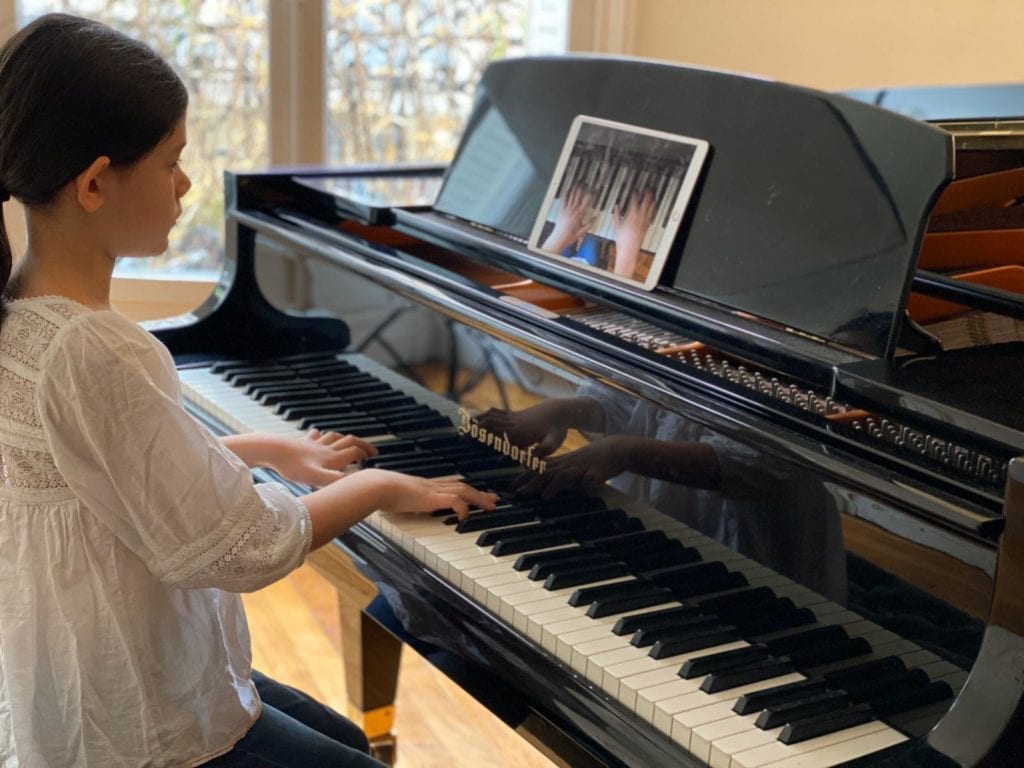
A structured method that allows students to continue progressing from home, in France or abroad.
Piano Académie has developed online lessons not only for private piano teaching, but also for group music lessons, early music discovery, musical theatre and interdisciplinary artistic activities.
This experience has allowed the school to expand its online offer since September 2020.
For each online course, Piano Académie keeps a clear framework: a structured commitment, carefully organised lessons and prices lower than those of in-school or home lessons.
The principle remains the same as in our group lessons at the school. The teacher moves from one student to another. When the exercise is completed, the student calls the teacher, who gives corrections and the next step.
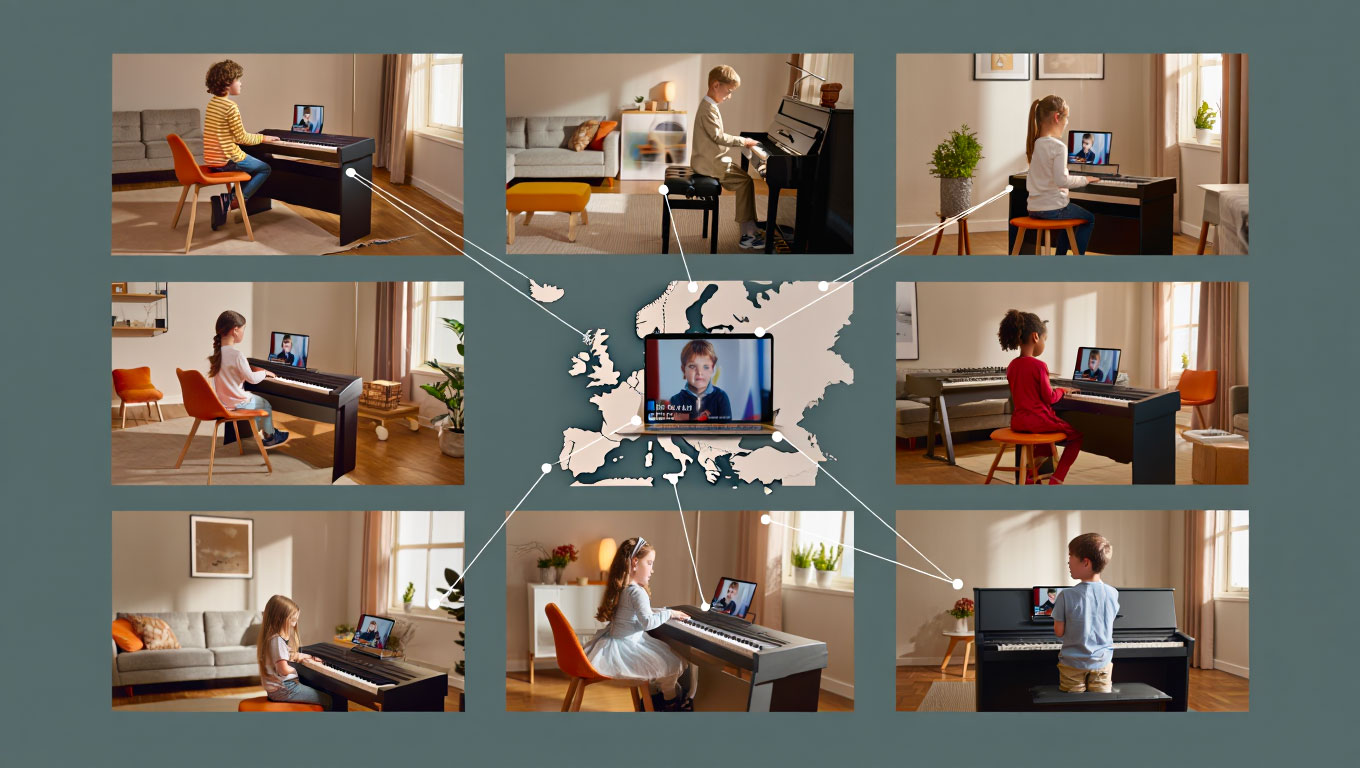
The teacher follows each student individually during the online class.
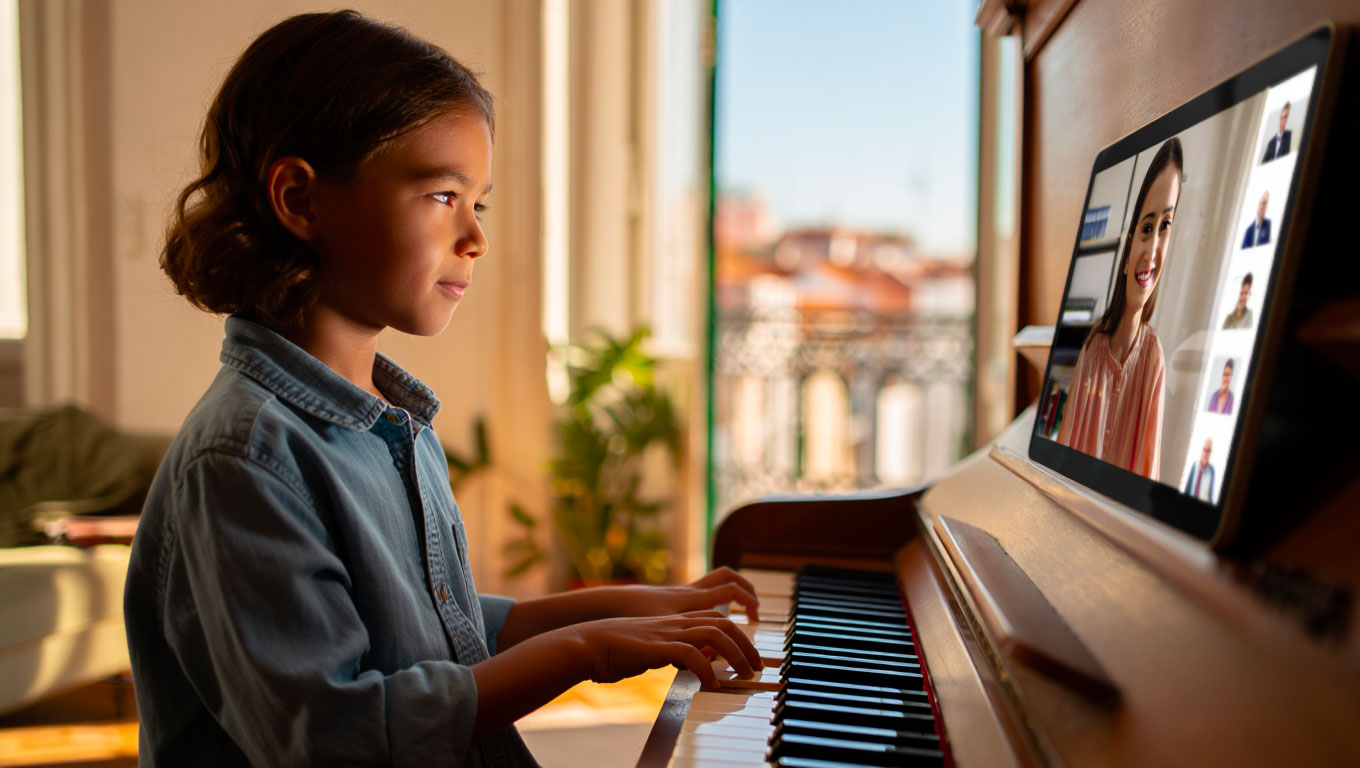
Students continue working while waiting for the next correction.
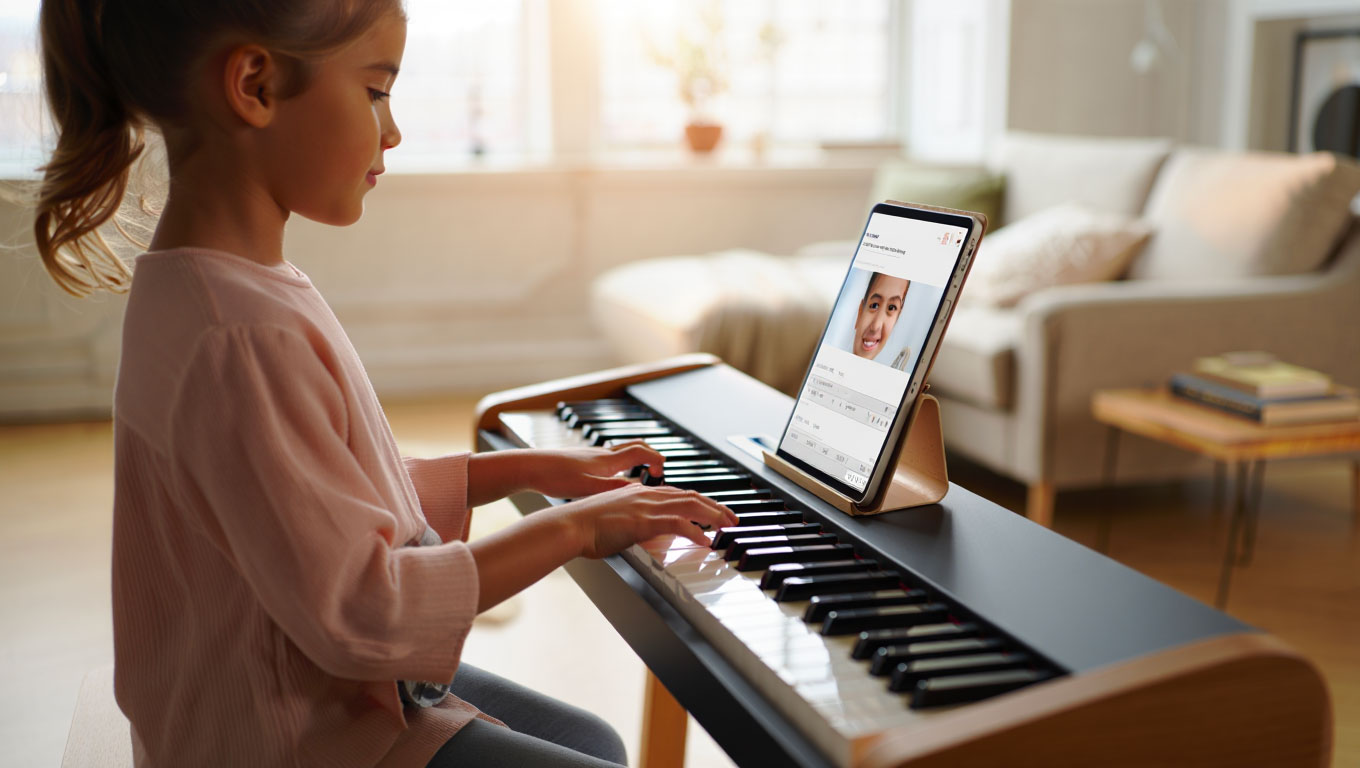
The online format helps students keep a steady practice routine.
The following formulas reproduce the offers presented on the French page, translated into English.
No registration fees. Sheet music to be purchased online: 5 €.
Registration fees not included: 35 €. Sheet music to be purchased online: 5 €.
Registration fees not included: 35 €. Sheet music to be purchased online: 5 €.
Annual registration fees and sheet music not included.
Annual registration fees and sheet music not included.
Annual registration fees not included.
Music theory lessons last from 30 to 45 minutes depending on the level.
Online courses allow students to maintain a regular rhythm, benefit from Piano Académie’s structured teaching method and continue progressing even when they are not able to come to the school.
Mi-Young LEE wanted to offer children effective scores that they would enjoy taking out, opening and using every day.
These books are designed to make piano practice clearer, more motivating and more enjoyable, while ensuring that each teacher follows the method created by Mi-Young LEE.
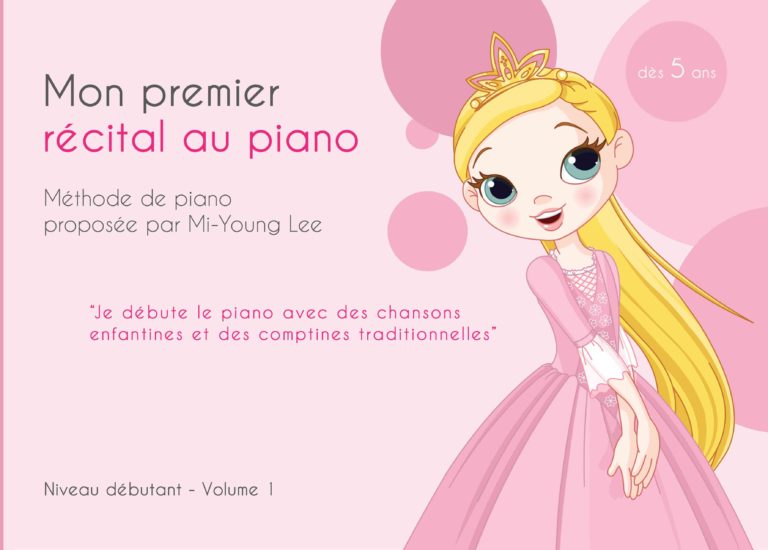
Attractive, practical and progressive materials that children enjoy handling and practising with.
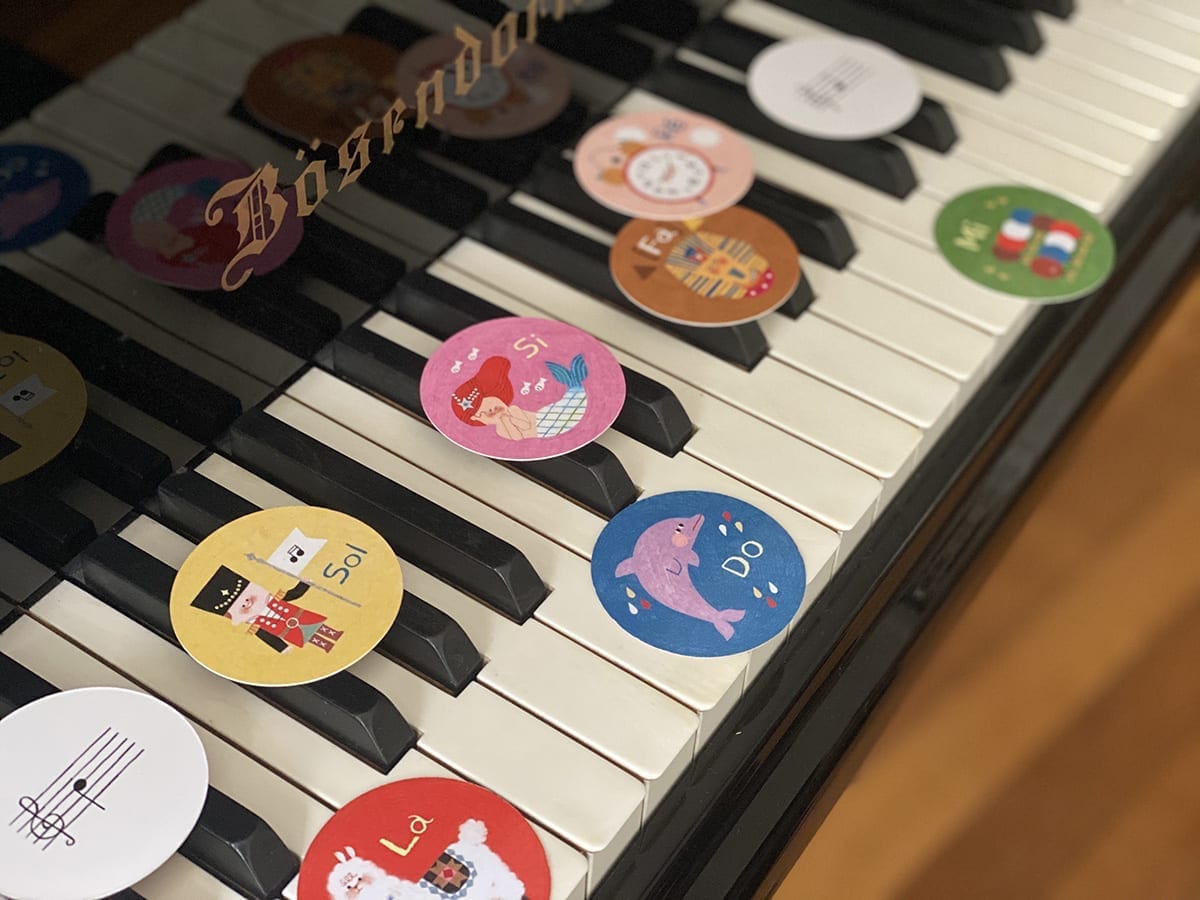
For young children, Mi-Young LEE created visually distinct books for young pianists, with different designs that make the materials more appealing and easier to identify.
The pieces taught throughout the year are melodies known by most children and families. This is important because young children are more motivated to repeat their lesson every day when the music is familiar and enjoyable.
These books also make it possible to ensure that every teacher teaches according to the method designed by Mi-Young LEE.
A first piano book for children from the age of 5.
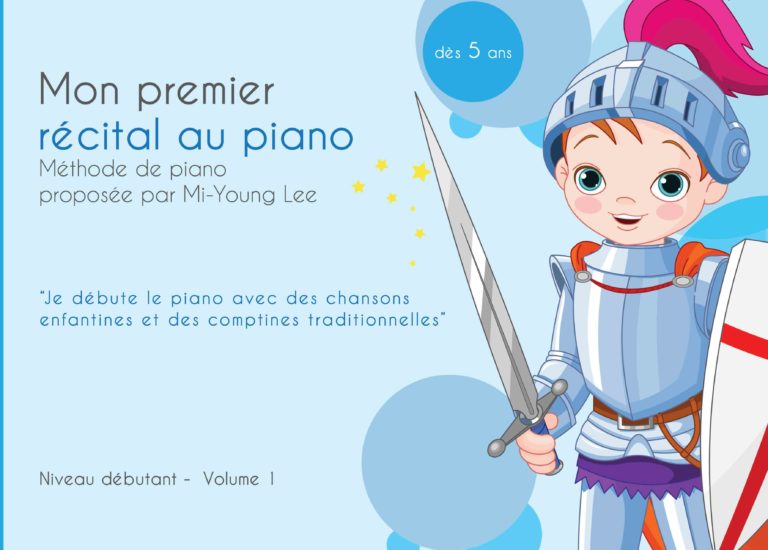
A visually distinct version for young pianists.
A continuation of the beginner pathway for children.
A more advanced Piano Académie score volume.
A flexible level used for scores accessible to different profiles.

Piano Académie adapts pieces from many musical styles so that students can play music they truly love.
Piano Académie adapts pieces from all musical styles so that every student can play their favourite songs, whatever their level.
The school has a catalogue of more than 100 pieces, organised into four levels of difficulty.
The Piano Académie catalogue is organised so that every student can find a score adapted to their level while still playing a piece that sounds close to the original.
Designed for beginner students, while still allowing them to play a version that reflects the original piece quite well.
Designed for students who have completed at least one year, or sometimes two years, of piano. The transcriptions are richer and produce a fuller musical result.
This level is a Piano Académie adaptation of the original piece, with the aim of achieving an exceptional piano result.
Used for certain scores that do not require a specific classification. The score can then be accessible to students of all levels.
Piano Académie has created a video for each score, allowing students and families to hear the musical result before purchasing it.
This makes it easier to choose a piece and to understand how the transcription will sound on the piano.
Each score can be purchased directly on the Piano Académie website through the online shop.

Students can choose pieces they enjoy while staying within a level adapted to their technical progress.

Playing familiar melodies helps students practise more regularly and with greater pleasure.
Piano Académie’s scores and transcriptions are part of the Mi-Young LEE Method: clear, progressive materials that help students enjoy their daily work and allow teachers to follow a coherent pedagogical framework.




Individualised group learning lies at the heart of Piano Académie’s philosophy. We accept a child for private lessons only when very specific needs make joining a group genuinely impossible or unsuitable.
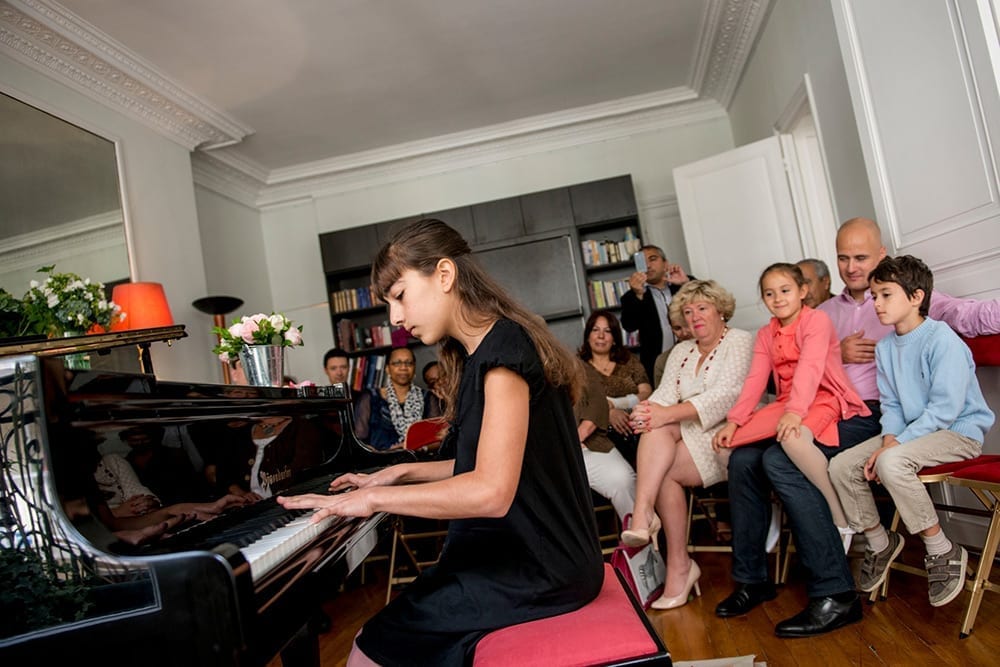
More than ten years of experience have shown us that individualised group lessons provide the best learning environment for the vast majority of children. Private tuition runs counter to this founding principle and is therefore offered only exceptionally, after Piano Académie has carefully reviewed the child’s situation.
This provision may be appropriate, for example, for a child with an autism spectrum disorder, significant ADHD or another particular need that genuinely prevents them from joining a group.
The family explains the child’s situation. The school then considers whether their needs genuinely justify an exception to its group-learning approach.
The objective remains the same: to help the child progress, develop independence and build a positive relationship with music.
A request based on convenience, scheduling constraints, shyness, a wish to progress faster or a preference for one-to-one tuition is not sufficient grounds for admission. More than 95% of our children’s lessons are taught in small groups.
The content and pace of each lesson are adapted to the child’s abilities, needs and individual sensitivity.
The scores and teaching tools created by Piano Académie facilitate understanding and encourage participation.
Progress is reviewed regularly so that objectives and teaching methods can be adjusted accordingly.
Regular communication with parents helps maintain a consistent environment that supports the child’s development.
Music reading, rhythm, technique, listening and interpretation are introduced progressively, with full respect for the child’s pace.
Music theory is studied in a dedicated group or online class, allowing the piano lesson itself to remain focused on the instrument.
Whenever appropriate and desirable, the child may take part in recitals and the end-of-year concert to celebrate their progress.
The family explains the child’s age, background and very specific needs, as well as the difficulties they experience in a group setting.
Our team determines whether the situation genuinely calls for exceptional individual support. Direct booking is not available.
If the request is considered appropriate, an assessment session may be offered before any admission decision, subject to availability.
The pack includes the annual administration fee, participation in the end-of-year concert, a practice notebook, one or two recitals, piano and music theory scores, a homework notebook, note and rhythm games, and the score for the end-of-year concert. 2026–2027 rates: €305 for the first child and €185 from the second child. See the children’s fee schedule.
The session is offered only after an initial discussion and a review of the child’s specific needs. It then enables the school to assess whether private tuition is genuinely the most appropriate educational response.
Tell us precisely about their situation and the difficulties that make a group setting unsuitable. The Piano Académie team will review your request and let you know whether an individual assessment may be considered.


